


A Deep Dive Into the Jets’ Heartbreaking Week 2 Loss


The New York Jets were given several opportunities to win their Week 2 matchup against the Packers, but unfortunately, they were unable to fully capitalize on them. Heading into the game, Green Bay was without their star running back, Josh Jacobs, and star edge rusher Micah Parsons. The weather also gave the Jets another potential edge, as the game was played in the rain, conditions that Jets quarterback Geno Smith is familiar with from his time in Seattle. In addition to all of this, though, the Packers were highly undisciplined during the game, drawing 14 penalties for a total of 133 yards, with an additional three penalties that the Jets declined, according to Bruce Haring of Athlon Sports.
There were moments during the game when the Jets’ defense seemed to have taken the life out of the Packers, and others when it seemed as if the Packers were handing the game to the Jets. The Jets played a solid game and could have—and should have—beaten a team that made the playoffs just a season ago. But “could have” and “should have” don’t matter to Jets fans as much as they once did. Fans are understandably tired of the moral victories and just want to see their team win. So, with that in mind, let’s take a look at what went wrong during the heartbreaking Jets Week 2 loss to the Packers.
The Defense
Before getting into what went wrong, it’s important to acknowledge how well the defense played throughout the game. Since Aaron Glenn took over defensive play-calling, the unit has improved significantly. Jets analyst Connor Rogers mentioned that Glenn has been able to get more out of the defense than the talent on the roster might suggest, and I think that’s a pretty accurate description of what he’s done so far. Through the first two weeks of the season, PFF has both the Jets’ defense as a whole and their run defense graded among the top five in the NFL, while their coverage grade ranks seventh.
Against the Packers, the Jets’ defense stood out and kept them in the game. The unit remarkably forced four fumbles, and although the Jets only recovered one of them, this demonstrated the defense’s clear impact. Furthermore, the Jets’ defense only allowed 63 rushing yards, which is exceptional, especially in wet conditions. This was the fifth-fewest rushing yards allowed during Week 2, and on top of that, they held Green Bay’s offense to only 199 total yards, which was the third-fewest in the NFL during Week 2, according to StatMuse.
The Jets also allowed the Packers to convert on only 1 of 9 third-down plays, per Amanda Vogt of the Jets, further illustrating the defense’s effectiveness during the game. There were instances where the Packers were unable to move the ball, and if they did manage to get things going, the Jets were all over the ball carrier. On multiple occasions, the defense seemed to put the “life” in MetLife Stadium and give the team momentum.
While it is true that wet weather conditions tend to favor defenses, the Jets’ defense deserves credit, as it was exceptional for the majority of the game and the team’s brightest spot.
The Jets’ Offensive Struggles
Unfortunately for the Jets, the offense struggled to consistently capitalize on their opportunities. Even though the offense showed flashes throughout the game, several mistakes ultimately hurt them, including missed throws, an ineffective run game, and poor execution when it mattered most. Geno Smith had an average game, finishing with 247 yards and 1 TD, but early on, he did miss the mark on a few of his passes. Whether it was the ball becoming slippery or simply errant throws, these misses could have allowed the offense to stay on the field longer and potentially score points.
However, there were bigger problems on the offensive side of the ball. The Jets could not establish the run game, something the team wants to make part of their identity. The offense as a whole ran for 67 yards on 27 attempts, with almost half of those yards coming from Geno Smith’s scrambles and an end-around play with wide receiver Isaiah Williams. Running backs Breece Hall and Braelon Allen combined for an average of 1.7 yards per carry on 21 carries for 36 yards. With numbers like these, relying on the run game is basically impossible.
In addition, right tackle Armand Membou specifically struggled during the game. He didn’t play well when it came to pass blocking, and he had an even worse time run blocking. Membou received a 40.6 run-blocking grade, per PFF, which ranked second-to-last among all tackles during Week 2. And this contributed to the Jets’ run game getting stuffed. To be more specific, when Breece Hall ran toward Membou, he lost a total of 3 yards on 4 attempts, per NextGen.
In the passing game, he allowed four pressures, two quarterback hits, and one sack, with that sack coming on the second play of the Jets’ sole overtime possession. This leads me into my next point, which is that the offense was unable to perform when it mattered most. On the Jets’ sole overtime possession, Geno was sacked on the first two plays, resulting in a 3rd-and-25 from their own 15-yard line. Immediately after that, Isaiah Williams was called for a false start, setting the offense back another 5 yards. The two sacks almost guaranteed a punt on the drive, and the false start penalty felt like the nail in the coffin.
Prior to this series, the Jets were unable to convert a 4th-and-short opportunity late in the fourth quarter as well. The Jets had two different opportunities to cross midfield for a first down. On 3rd-and-2, the Jets ran the ball up the middle and got stuffed. Then on 4th-and-1, they ran up the middle out of the shotgun for the second time in a row, and they were stuffed once more. This is another example of the offense showing its inability to execute during crucial moments. While some fault lies with the offense for not being able to move the ball during this critical sequence, the coordinator’s decision to run up the middle out of the shotgun once more after getting stuffed was baffling. This brings me to another reason why the Jets were unable to secure the win.
Coaching Struggles
The Jets had more yards than the Packers, had more first downs, converted third downs at a higher rate, had just over 10 more minutes of possession, didn’t turn the ball over, and forced a turnover. But somehow, they were unable to win the game, and I think the coaching staff deserves some blame.
Green Bay’s lack of discipline started very early in the game, and by the end of the game, they drew 14 accepted penalties for a total of 133 yards. The Jets had the opportunity to capitalize on the Packers’ sloppiness, but instead, they committed 13 accepted penalties of their own. This resulted in a total of 156 penalty yards, something that is completely unacceptable. While this doesn’t fall entirely on the coaching staff, some may say that part of it should.
In addition to this issue, we saw the first of multiple blunders from the Jets during the second quarter. The team started with the ball on their own 10-yard line with four minutes left and no timeouts. The Packers still had all of their timeouts, so it would make sense if the Jets wanted to burn some clock in case they were forced to punt from deep in their own territory with a decent amount of time remaining. But as the Jets started to move downfield, they continued to let time drain, confusing several reporters, with Connor Hughes of SNY mentioning that they seemed to lack urgency. Ultimately, they were unable to score on this drive, and I believe that the lack of urgency should be put on the coaching staff, whether it was Aaron Glenn’s responsibility, Frank Reich’s, or someone else’s.
Reich’s play-calling wasn’t great either, and I thought it was too conservative at times, especially with him continuing to call runs after the run game was clearly inoperative. Though, in fairness to Reich, he probably noticed this, as evidenced by the fact that the Jets threw the ball 41 times. But it just felt like the offense lacked creativity and the ability to adapt to what Green Bay was doing.
There’s a famous saying about doing the same thing over and over again and expecting different results. That came to mind when looking at this decision by Reich: running up the middle two times in a row on third and fourth down. As I mentioned earlier, the decision to run up the middle out of the shotgun once more after already getting stuffed was baffling. To be fair, I wouldn’t have criticized this decision if it had worked. But when a play fails and you immediately run a similar one right after, I think it’s fair to question whether a different play should have been called.
In addition to the criticism of Frank Reich, there is Aaron Glenn, who also made some puzzling decisions. To be more specific, let’s go back to Green Bay’s final drive in the fourth quarter. The score was 17-17 with 1:05 left, and the Packers had the ball at the 50-yard line on a 3rd-and-10. Jordan Love connected with Christian Watson for a 5-yard completion, and as a result of Watson staying inbounds, the game clock didn’t stop. This gave Aaron Glenn an opportunity to use one of his two remaining timeouts in hopes of giving the offense a chance at a game-winning drive.
But instead, he opted not to use a timeout, and consequently, the clock ran down to 21 seconds. This meant that if the Jets’ offense got the ball back, they would have had around 40 fewer seconds than if Glenn had called a timeout.
And if I’m being honest, I originally thought it would be smart to let the clock run out in case the Packers changed their minds and decided to go for it on fourth down after Glenn called a timeout. I thought Glenn was making the right decision at the time; however, after seeing how the next sequence of events played out, I think they should have used a timeout.
After Glenn opted not to take a timeout, Green Bay smartly took a delay-of-game penalty, resulting in a 10-second runoff. Then, with 2 seconds left in the game, Packers head coach Matt LaFleur called a timeout to stop the clock, allowing them to have a last-second Hail Mary opportunity.
While the Packers were unable to score on the Hail Mary, it seemed that Aaron Glenn completely got outcoached in the final minute of the game. He gave up an opportunity to give the Jets a potential game-winning drive. And right after the game, Glenn was asked about this moment, and he said he “didn’t consider using that [timeout],” per SNY.
Then the next day, Glenn explained that he didn’t want to put the offense in a “backed-up situation” in their own territory since the Packers would be punting from around midfield. To add to that, Green Bay had two timeouts left, and Glenn did not want to risk the Jets’ offense failing to move and having to give the ball back to the Packers, according to Josh Alper of NBC Sports’ Pro Football Talk. I do understand this explanation, but looking back at it after the loss, I think it may have been a better decision to simply get the ball instead of losing the opportunity at a game-winning drive. And if worst came to worst, the Jets’ offense could’ve still run the ball to burn the clock.
Even so, when a coach says he didn’t consider calling a timeout when many expected or wanted him to, it can raise questions about his time management, especially with Glenn receiving criticism for this in the past. To add insult to injury, opposing head coach Matt LaFleur was also “confused” by Glenn’s decision, according to Rich Cimini of ESPN. So while I do understand where Glenn was coming from, I think that the whole fiasco at the end of the fourth quarter could have been avoided.
Finally, there is one more questionable decision that Glenn made, which came at the start of overtime. The Jets had won the coin toss and elected to receive the ball first, something only 31.25% of teams have done since the updated overtime rules, per ESPN Research. However, with the new overtime rules, I believe choosing to defend first would have given the Jets the best chance to win. Defending first would have allowed them to know exactly what their offense needed to do when they got the ball.
For example, if the defense stopped the Packers from scoring, the Jets would have a clear understanding that a field goal would win the game. On the other hand, if the defense allowed the Packers to score a touchdown, the Jets’ offense would have a clear understanding that they needed to score a touchdown. Aaron Glenn was asked about this decision as well, and according to Antwan Staley of the New York Daily News, Glenn wanted the Jets’ offense to control possession during overtime. And to be completely honest, I think this was a horrible decision.
So, with all of these things in mind, I think it’s safe to say the coaching staff played a significant role in the collapse against the Packers.
Final Thoughts
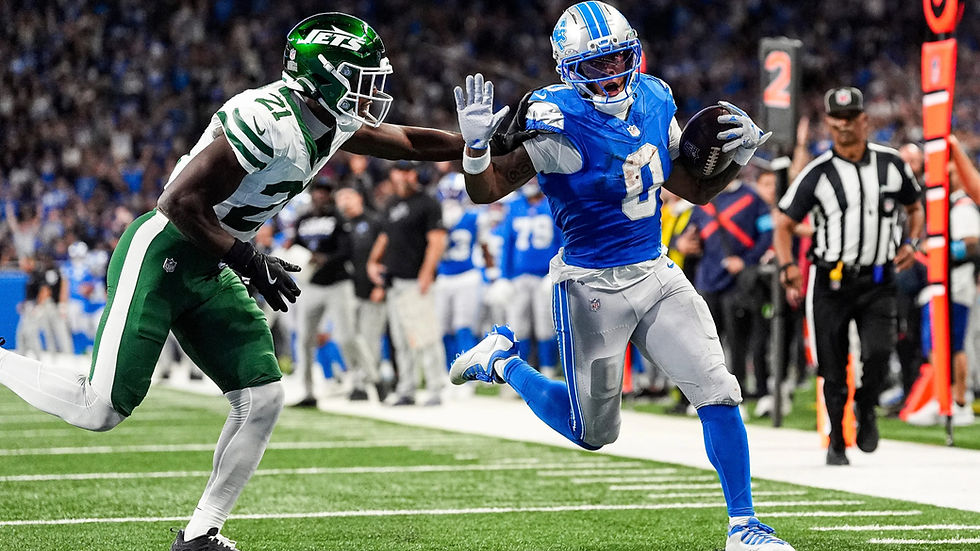
It’s unfortunate that the Jets were unable to start 2-0 for the first time since 2015. A variety of things contributed to their late collapse against Green Bay, such as offensive struggles and coaching decisions. While some of these things may not have been criticized as much, or at all, if the Jets had won, I do think they played a role in the loss and are worth criticizing. So, if they want to get back in the win column, they’ll have to make sure these issues are taken care of. The Jets take on the Lions this upcoming Sunday, and it will be intriguing to see how Glenn and the rest of the team respond after this gut-wrenching loss.
If you're interested in being notified when the next article comes out, be sure to scroll down to the "Free Subscription" form and subscribe, we hope you enjoyed!


Comments